Analogue-Electronics
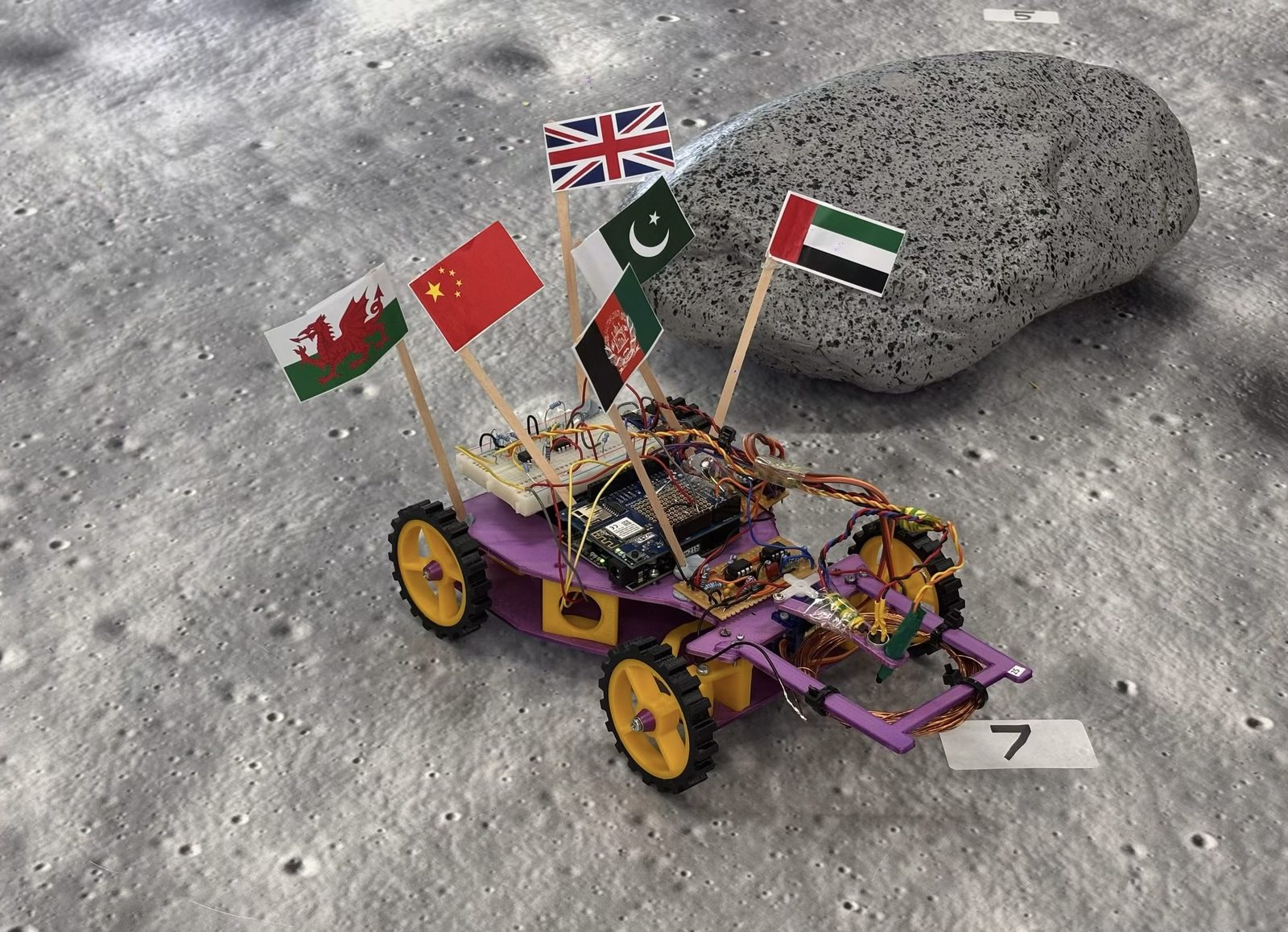
EEE Lunar Rover
A WiFi-controlled rover that drives across a fake lunar surface, tasked to hunt down artificial rocks, and reads their signals and classify rocks.
- Awarded Best First Year Project 2026 at Imperial College London
- Designed, tested, and debugged the infrared and magnetic circuits, and soldered three of the four sensor boards
- Built a separate analogue circuits for each of the four sensors, then combined them onto one PCB
- 3D printed chassis with ackermann steering and attached the flags of the nationalities in the team
- Controlled and monitored live from a browser over WiFi
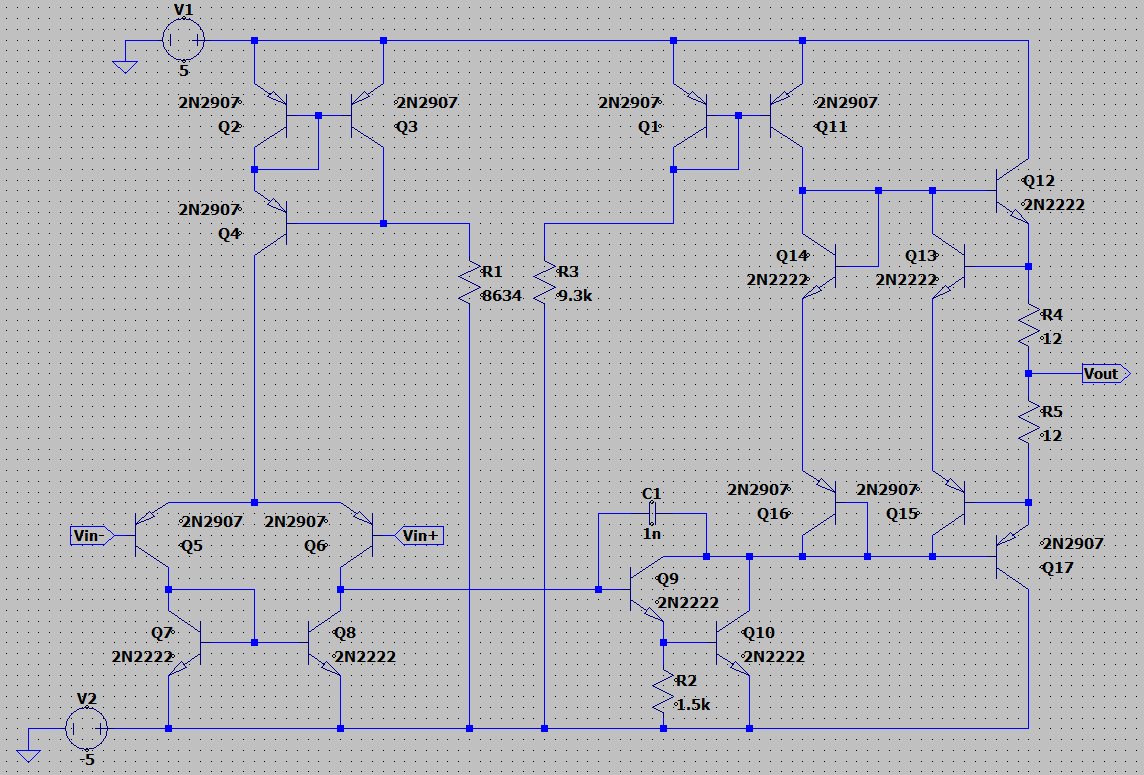
Operational Amplifier in LTSpice
Spent a few months teaching myself the internal layout of an OpAmp, then built one from scratch out of individual transistors in LTSpice.
- Learned and built every stage myself: differential pair, current mirrors, and a push-pull power stage
- Tested it by stepping the feedback resistor through four values and checking the gain against theory
- Measured gain matched the predicted Rf/Rin ratio almost exactly, even at ×1000