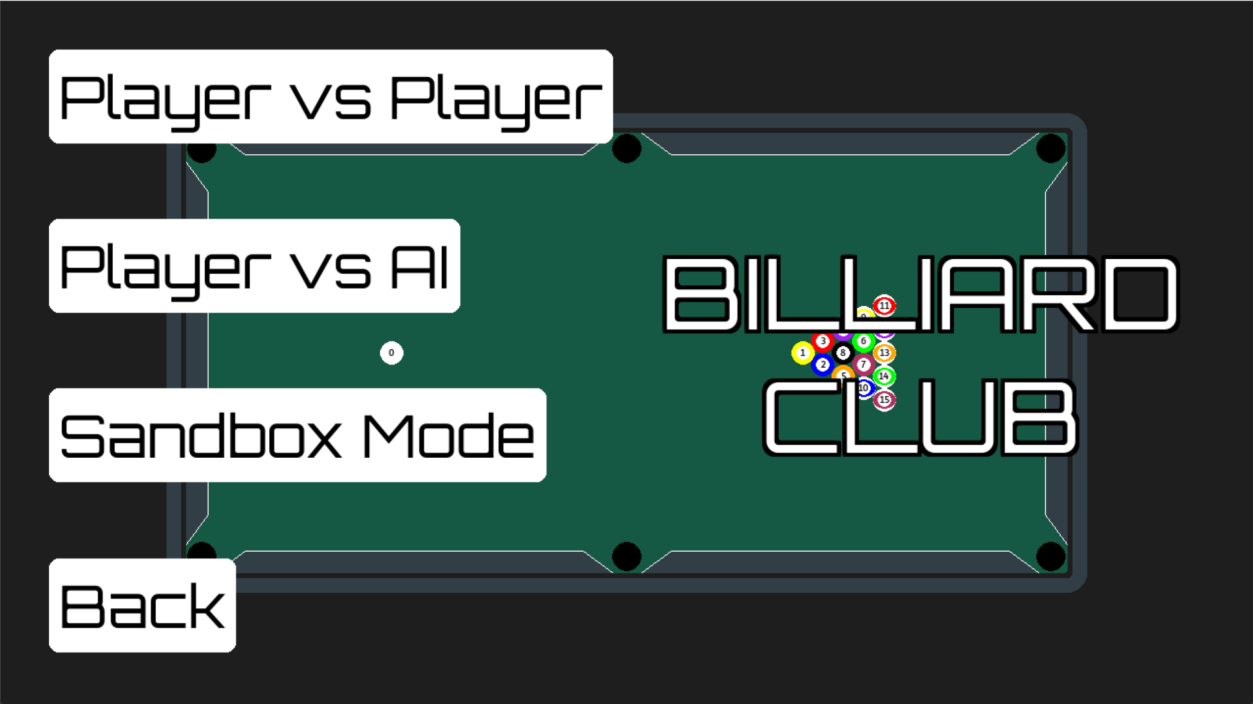
A 2D pool game built from scratch in Python and Pygame, with its own physics engine, an AI opponent, and a full menu system. Built solo over eight stages, from a bouncing-ball prototype to final polish.
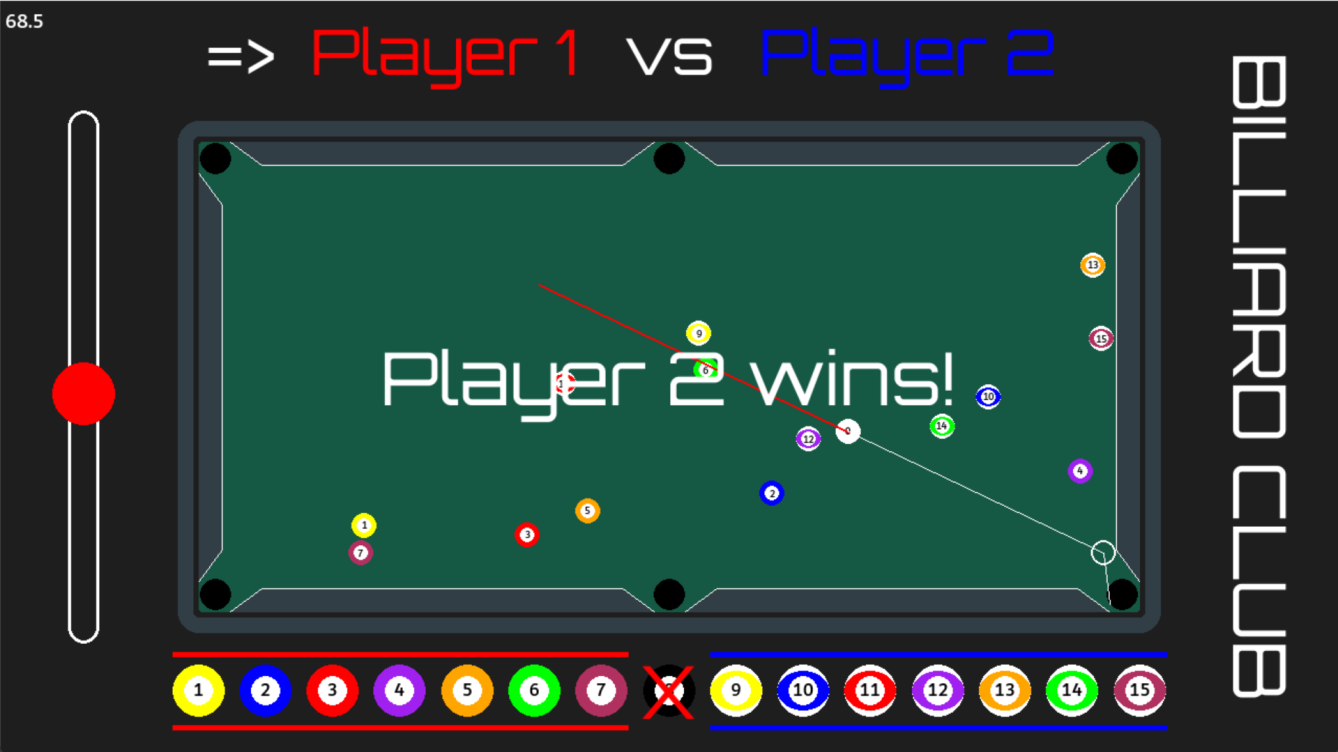
It implements full 8-ball rules: turn tracking, spots/stripes assignment, fouls, and win detection, on top of a physics engine I wrote from first principles: friction, impulse-based collisions, and potting detection against each hole. An aim-assist line shows the cue ball’s projected path, reflecting off the cushion if it would bank first. There’s a basic AI opponent for Player vs AI games, plus Player vs Player and a free-play Sandbox mode.
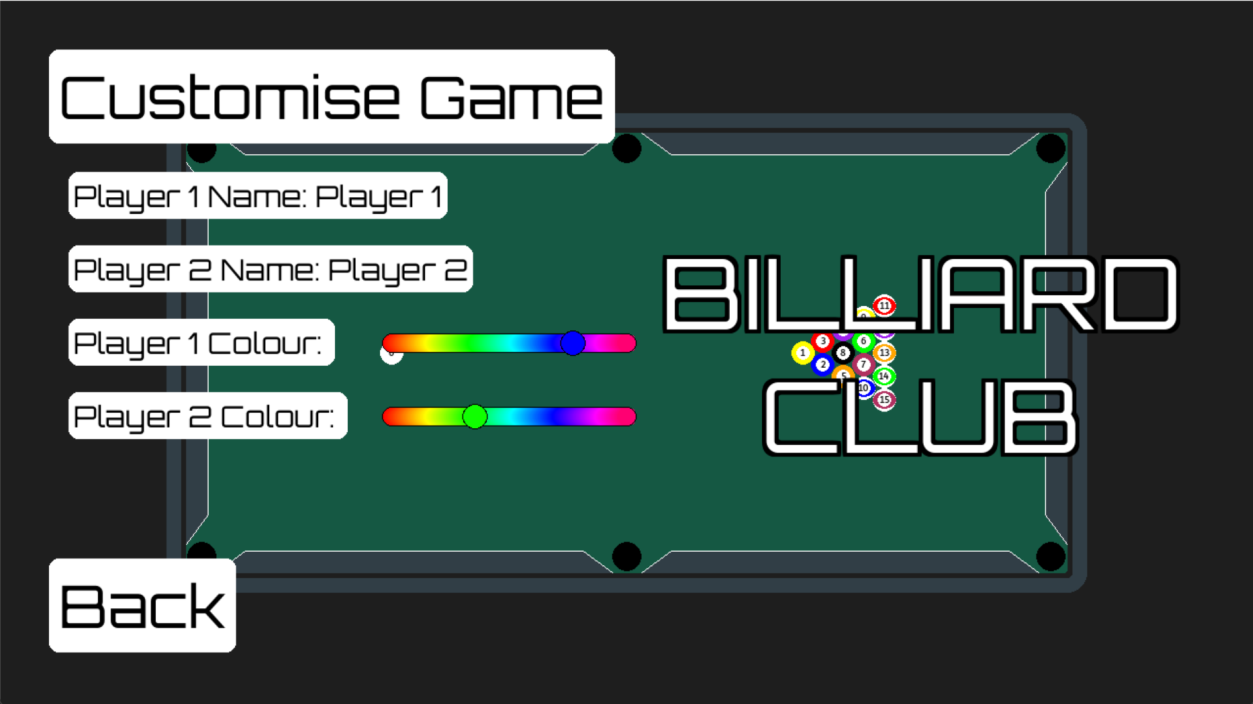
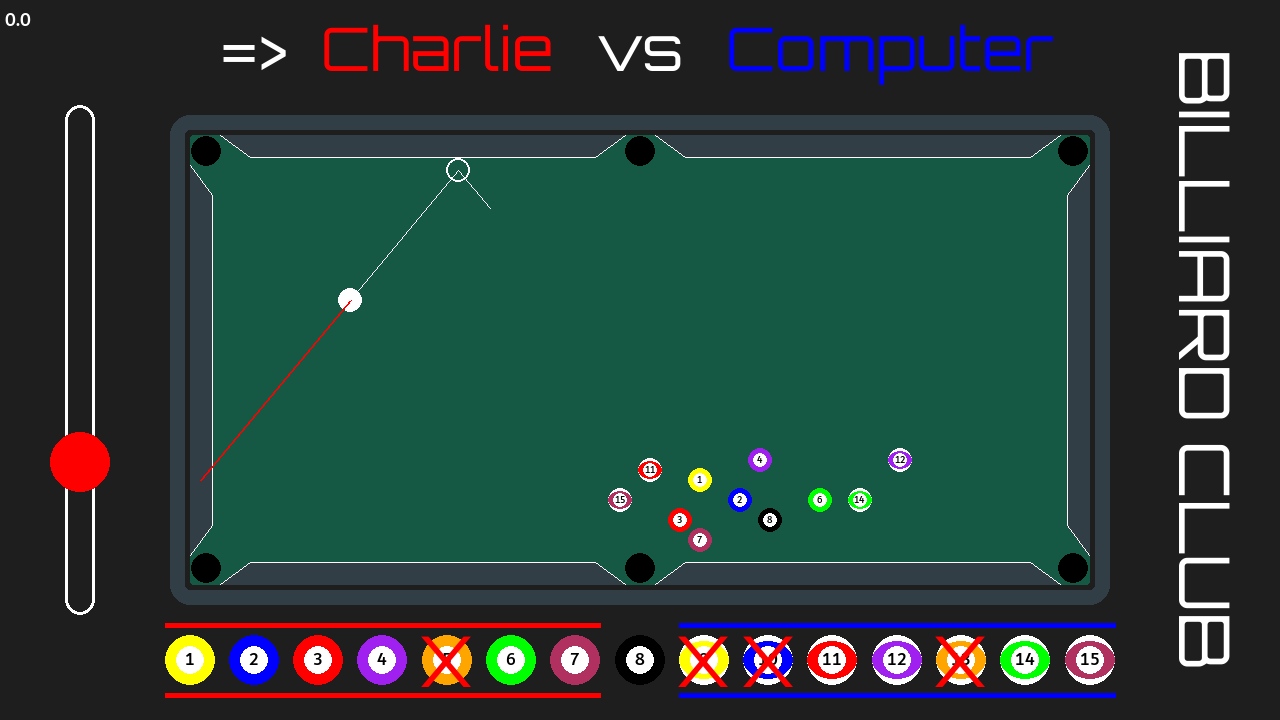
Around that sits a full menu system: main menu, mode select, a “Customise Game” screen where each player picks a name and colour, a pause menu, and win/lose screens. Whichever colour a player picks carries through into the match, tinting their name and ball-tracker border so it’s clear at a glance whose shot it is. Volume splits into master, music, and sound-effect sliders, with audio pulled from freesound.com.
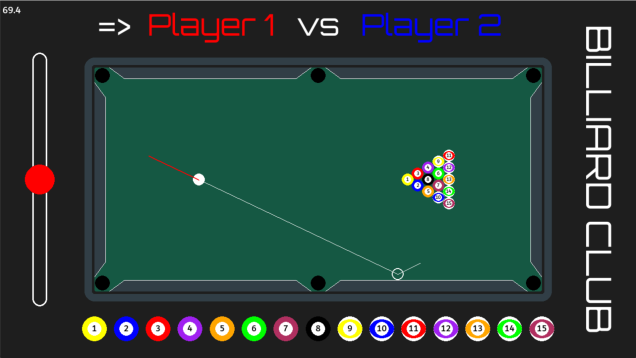
The bank-shot aim assist is the one bit of the physics engine that runs before the cue ball ever moves: it projects the cue ball’s path forward and, if that path would hit a cushion first, bends the line at the rail to show where it reflects, rather than just pointing straight at the target.
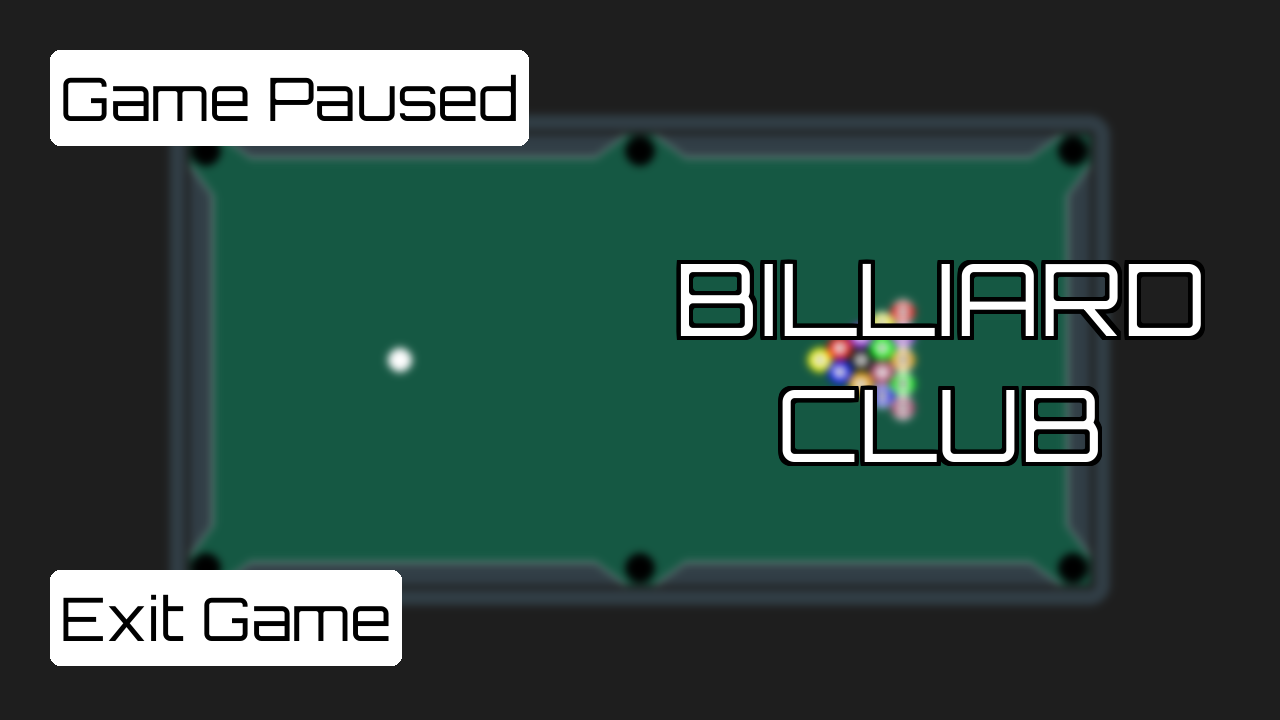
Pausing (Esc) drops a blurred, dimmed version of the table behind a simple two-button overlay, so the board state is still visible underneath without being distracting.
I built it in stages, testing after each one: physics and collisions first, then the table and UI, then cue mechanics, rules, AI, menus, audio, and a final polish pass. The trickiest parts got prototyped in isolation first: a standalone ballPhysics.py for collisions and restitution, and a sliders.py for the shot-power UI, before merging both into main.py.
Testing: a full pass/fail test plan covering rules, UI, and menus, plus stress-testing the physics with a screen full of balls and getting friends to play through it.
What I’d add next: a short tutorial overlay for first-time players, and a 9-ball mode. I sketched the logic for both but ran out of time to build them.
Controls: aim with the mouse, set shot strength with the power slider, left-click to shoot, Esc to pause.
Stack: Python, Pygame, NumPy, OpenCV
Status: complete
Repo: github.com/robertscharlie/billiardclub-NEA
Full write-up: complete design document (PDF, 287 pages): analysis, design, the full staged build log, testing, and evaluation.